Festival Booth Operations: Connecting Wireless Card Machines to Subscription Management Tools Through Secure Interfaces While Upholding Transaction Regulations
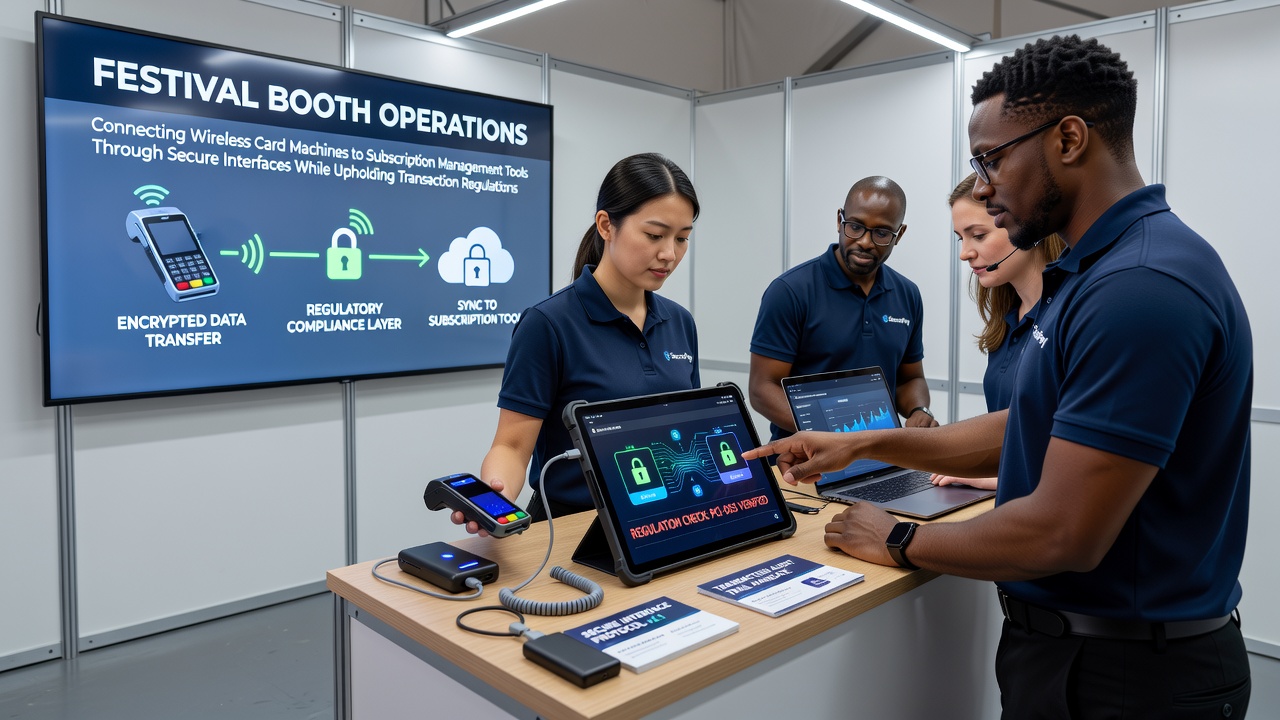
Festival organizers and vendors have expanded their use of wireless card machines at temporary booths, linking these portable devices to subscription management platforms that handle recurring charges for memberships, season passes, and vendor renewals, all while maintaining compliance with payment security rules. These connections rely on encrypted APIs that transmit transaction data between point-of-sale hardware and cloud-based billing systems without exposing sensitive card details during high-volume event days.
Wireless Hardware at Temporary Event Locations
Portable card readers equipped with cellular or Wi-Fi capabilities now serve as the primary entry point for payments at festival grounds, where fixed infrastructure remains unavailable. Operators position these units at food stalls, merchandise tents, and ticket gates, allowing staff to process both one-time purchases and sign-ups for ongoing subscriptions that continue after the event concludes. The hardware transmits data through secure channels to backend tools that manage customer profiles, billing cycles, and renewal notices.
Research from the PCI Security Standards Council indicates that wireless devices must incorporate end-to-end encryption protocols to meet data protection benchmarks during outdoor operations. Vendors at multi-day festivals often run dozens of transactions per hour, requiring stable connections that prevent dropped sessions when network signals fluctuate due to crowd density or weather conditions.
Building Secure Interfaces Between Devices and Platforms
Secure interfaces function as the bridge between wireless readers and subscription tools, typically through tokenized API calls that replace actual card numbers with unique identifiers. This method allows a festival booth operator to capture payment credentials once and schedule future charges for subscription services without storing full account data on the portable device itself. Developers configure these interfaces to authenticate each transaction using certificates and session keys that rotate automatically.
Those who have studied event payment flows note that integration often occurs through middleware layers which validate requests against predefined rules before forwarding them to the subscription engine. In June 2026 several jurisdictions plan to introduce updated testing requirements for these interfaces, focusing on resilience against man-in-the-middle attacks during large public gatherings.
Subscription Tools Handling Recurring Festival Revenue
Subscription management platforms track customer consents, calculate prorated charges, and generate invoices that align with festival-specific offerings such as annual membership renewals or vendor stall fees billed monthly. When a wireless card machine initiates a sign-up at the booth, the platform receives the tokenized data and schedules the first payment immediately while setting flags for future cycles. This automation supports steady revenue streams that extend beyond the event dates.
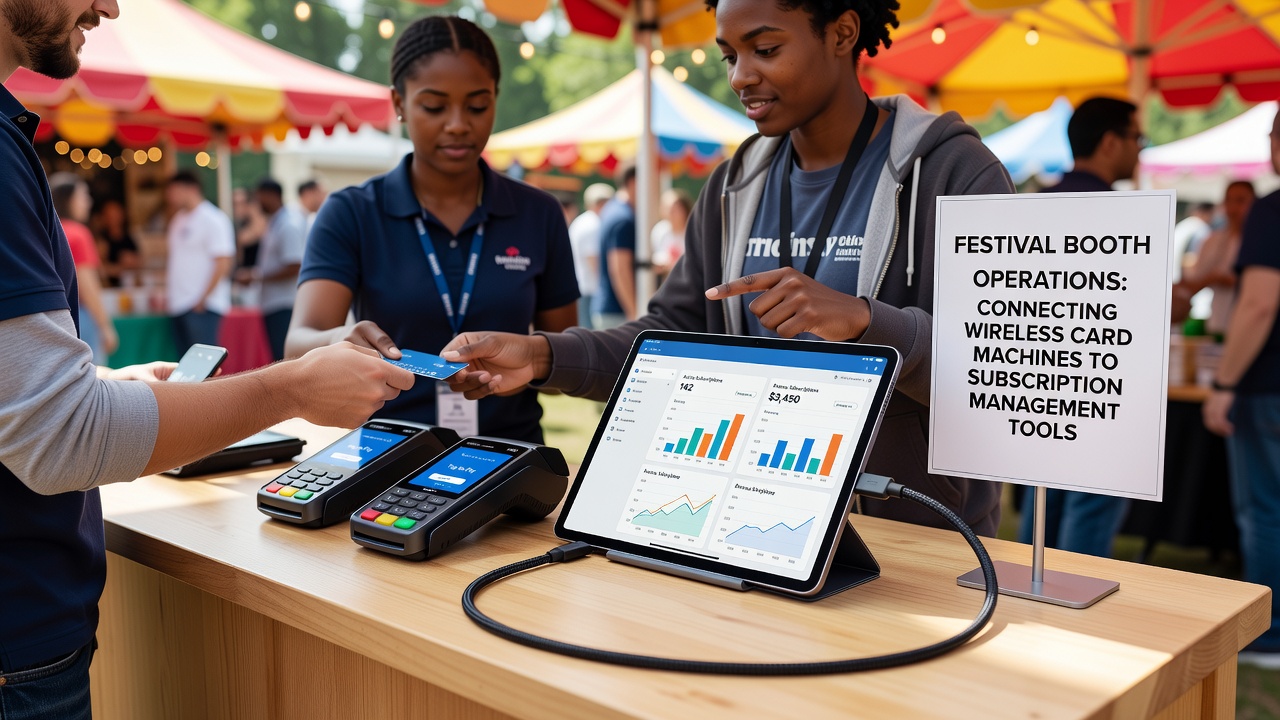
Observers report that integration testing at festivals includes simulated high-traffic scenarios to verify that subscription triggers activate correctly even when multiple readers operate simultaneously. Data shows that systems using these connections reduce manual reconciliation time by routing each approved charge directly into the recurring billing queue.
Regulatory Requirements for Transaction Handling
Transaction regulations require that all connections between wireless machines and subscription systems adhere to standards covering data encryption, access logging, and breach notification timelines. In practice this means festival operators must document every interface endpoint and conduct regular audits that confirm no unencrypted card data travels across networks during peak hours. European Central Bank guidelines emphasize separate controls for recurring payment authorizations versus single purchases, which affects how booth systems flag subscription enrollments.
Take one regional festival coordinator who coordinated with compliance teams to map data flows from each wireless reader through the API layer and into the subscription database. The process revealed that tokenization combined with point-to-point encryption satisfied both domestic and cross-border rules without requiring additional hardware at temporary sites.
Operational Patterns Observed Across Multiple Events
Event teams frequently establish redundant network paths for wireless devices so that subscription updates continue even if primary cellular towers become overloaded. Staff training covers how to initiate a recurring charge request on the reader, confirm customer consent on the device screen, and verify that the subscription platform has acknowledged receipt through a confirmation code. These steps keep operations moving while preserving the audit trail demanded by oversight bodies.
Figures from industry reports reveal that festivals adopting these linked systems process subscription sign-ups at rates comparable to permanent retail locations, provided the interfaces maintain consistent response times under variable outdoor conditions.
Conclusion
Festival booth operations continue to evolve through tighter connections between wireless card machines and subscription platforms, supported by encrypted interfaces that satisfy transaction regulations across regions. The practices described rely on established technical standards and documented workflows rather than ad-hoc solutions, allowing vendors and organizers to manage both immediate sales and longer-term billing cycles from temporary locations. As interface standards receive updates scheduled around June 2026, operators maintain focus on verification procedures that keep data flows secure and traceable throughout each event cycle.